Romain Rajkumar , Physiotherapist in Paris, 3rd arrondissement
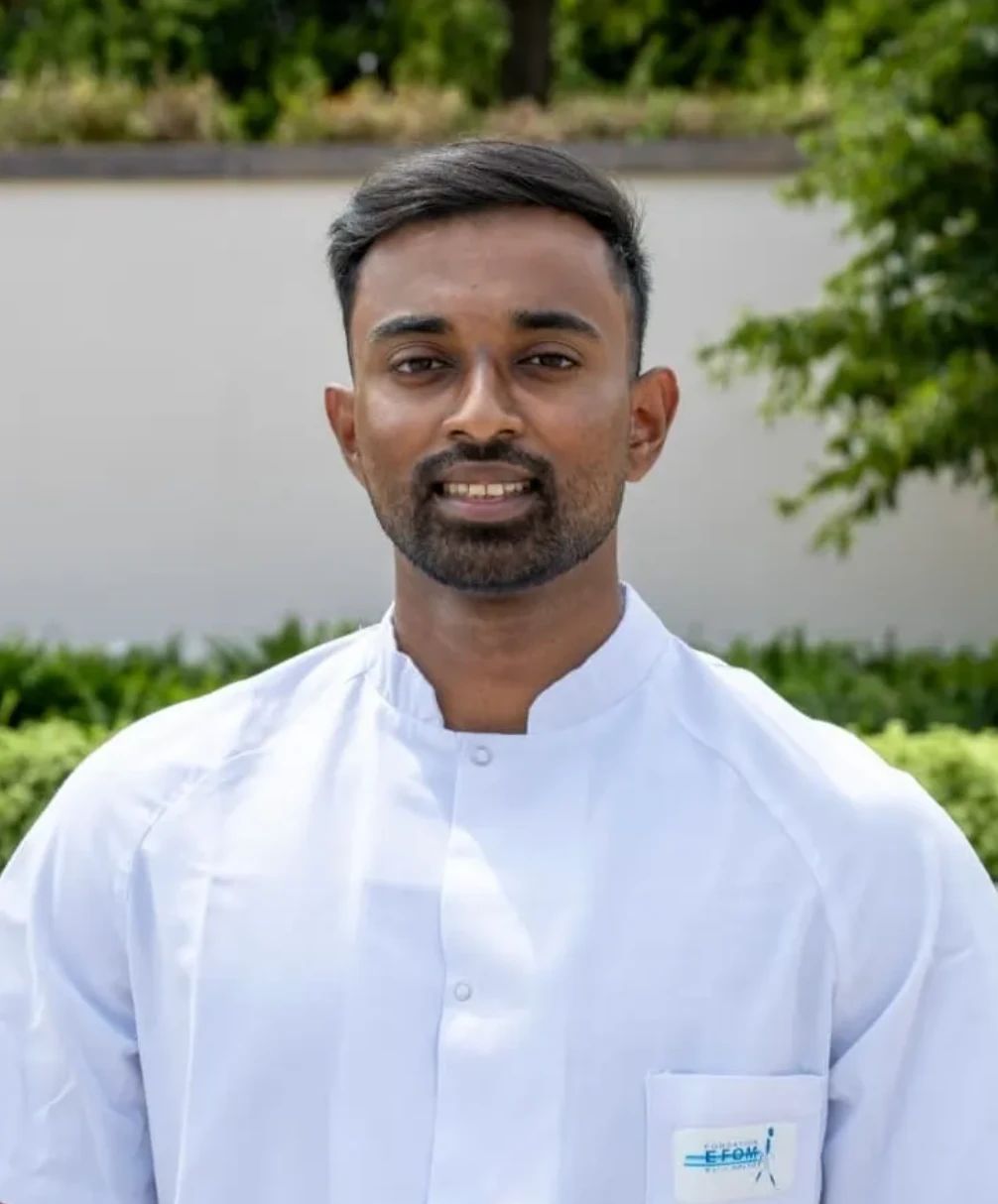
Physiotherapist, French State Diploma Cabinet Beaubourg, Paris 3rd RPPS 10112010573
Physiotherapist at Cabinet Beaubourg, 50 rue Rambuteau, Paris 3rd. Rehabilitation of all joints and the spine: shoulder, knee, hip, back pain, post-surgery and return to sport.
Key facts
- Qualification
- French State Diploma in physiotherapy, IFMK Fondation EFOM Boris Dolto, Paris
- RPPS
- 10112010573
- Coverage
- Contracted with French national health insurance, direct billing, Carte Vitale
- Languages
- French, English
Care
Musculoskeletal rehabilitation after injury or surgery, or for pain, and sports physiotherapy.
Where does it hurt?
Choose an area of the body to find the care page that covers it and book an appointment.
For guidance only, not a substitute for medical advice.
-
Neck pain or stiffness, after an awkward movement or long hours sitting. The assessment looks at how the neck moves and guides the exercises.
-
Shoulder pain or reduced movement, after an injury, surgery or with no obvious cause. Rehabilitation works on range of movement, then strength.
-
Elbow pain linked to a repeated movement, in sport or at work, or rehabilitation after a fracture or surgery.
-
For common low back pain, physiotherapy combines exercises and advice on staying active, as recommended by the French National Authority for Health (HAS).
-
Hip pain or stiffness, or recovery after a hip replacement. Work focuses on joint mobility, strength and walking.
-
Sprain, anterior cruciate ligament (ACL) injury with or without surgery, pain around the kneecap. Rehabilitation follows the stages set at the assessment.
-
Ankle sprain, heel or arch pain. Rehabilitation includes balance and stability work.
-
Upper limb
Shoulder rehabilitation, Elbow rehabilitation, Wrist rehabilitation Read the page : Upper limb -
Back and neck
Neck (cervical spine) rehabilitation, Back rehabilitation, Lower back (lumbar spine) rehabilitation Read the page : Back and neck -
Lower limb
Hip rehabilitation, Knee rehabilitation, Ankle rehabilitation, Foot rehabilitation Read the page : Lower limb -
Sports physiotherapy
Sprains, Muscle injuries, Tendon pain, Return to sport Read the page : Sports physiotherapy
Background
Romain Rajkumar qualified as a physiotherapist (French State Diploma) in 2026 and practises in Paris. He sees patients in French and English.
Training
- French State Diploma in physiotherapy (2026)
What are the optimal muscle-strengthening methods for the hip and knee muscles in the care of patients with patellofemoral pain syndrome?
Translated from the original French title.
The practice
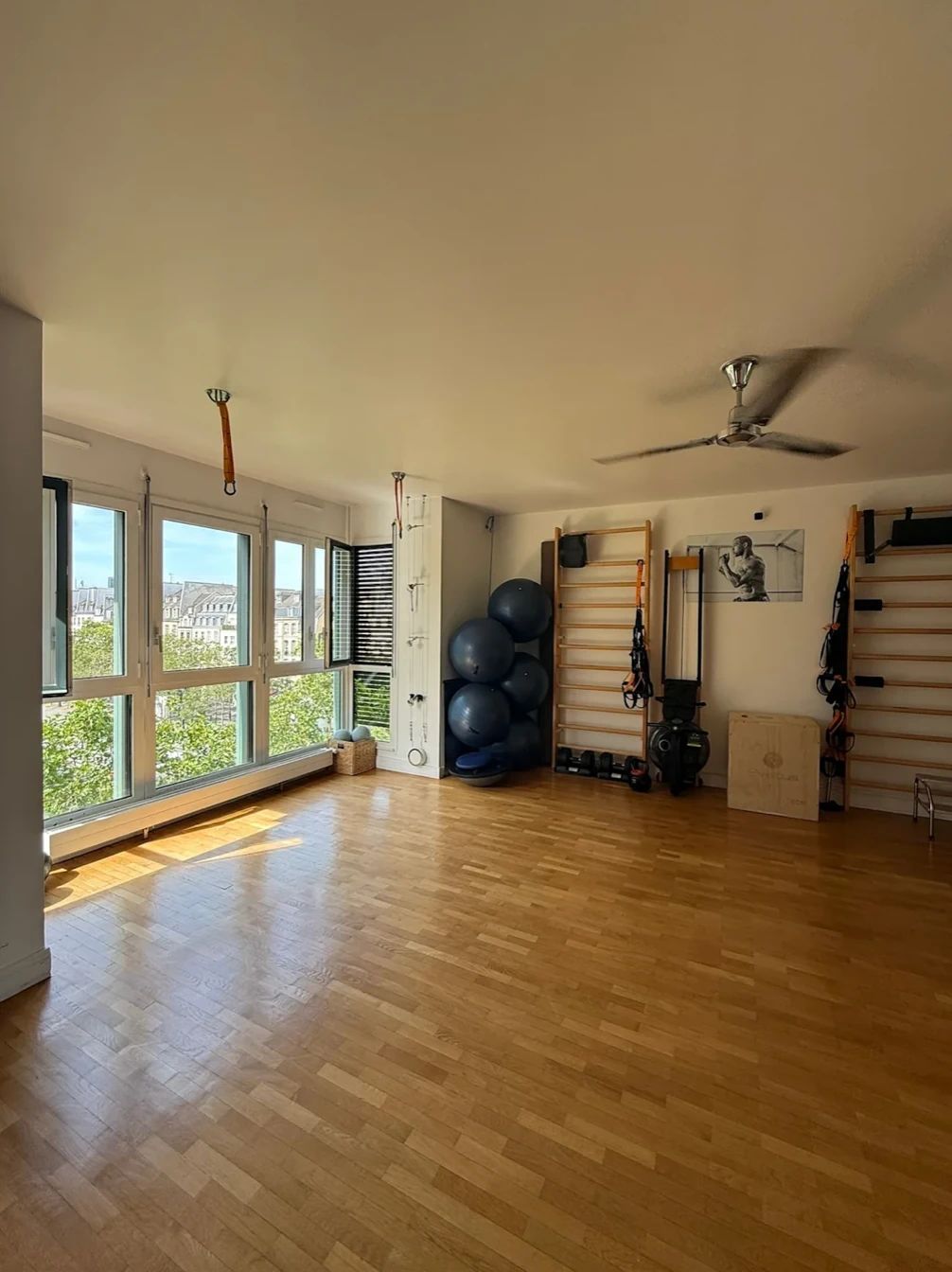
Cabinet Beaubourg is a bright practice on the 5th floor, with a lift, on rue Rambuteau, with a lovely view.
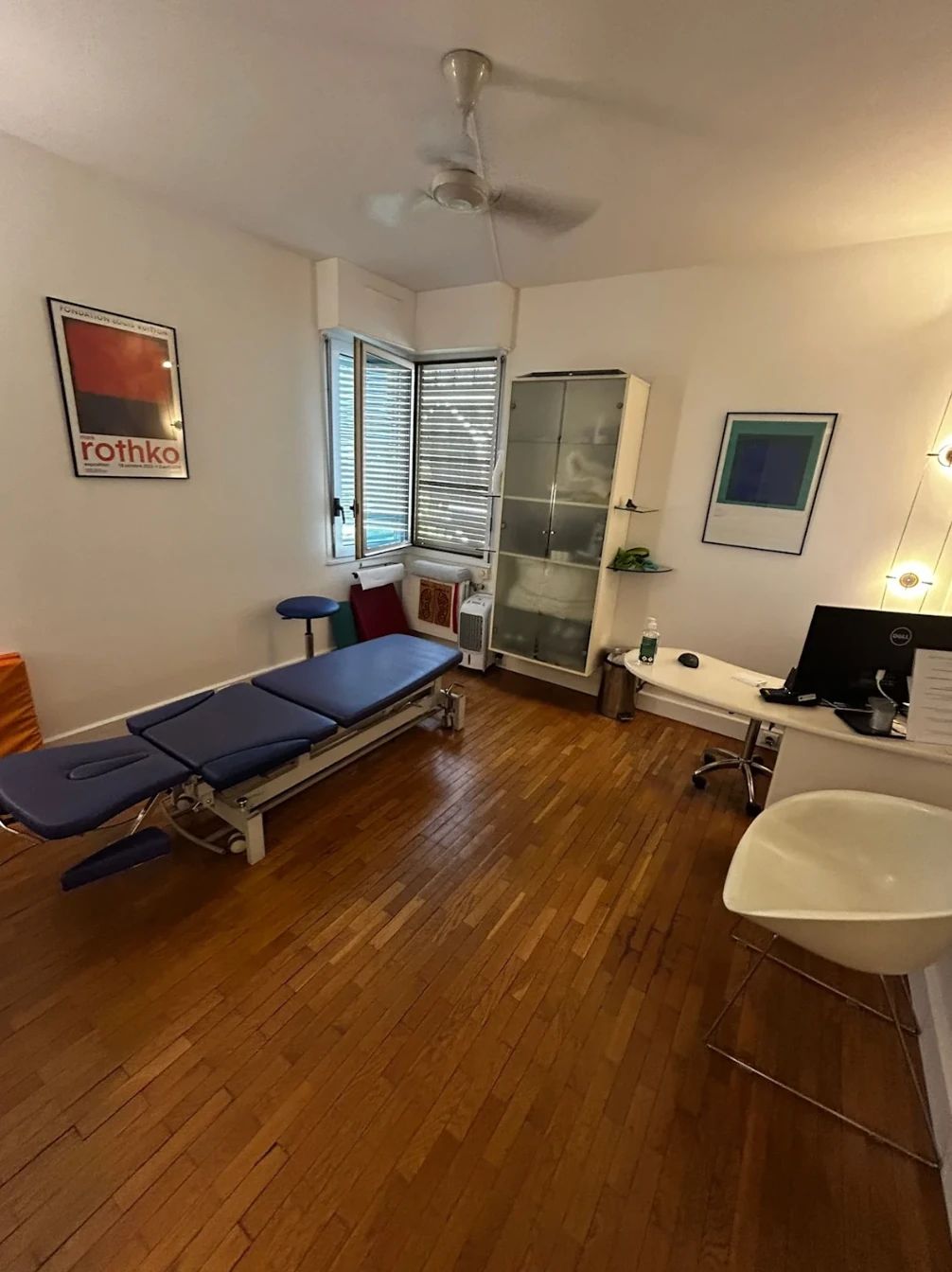
The treatment room
For the assessment and one-to-one care.
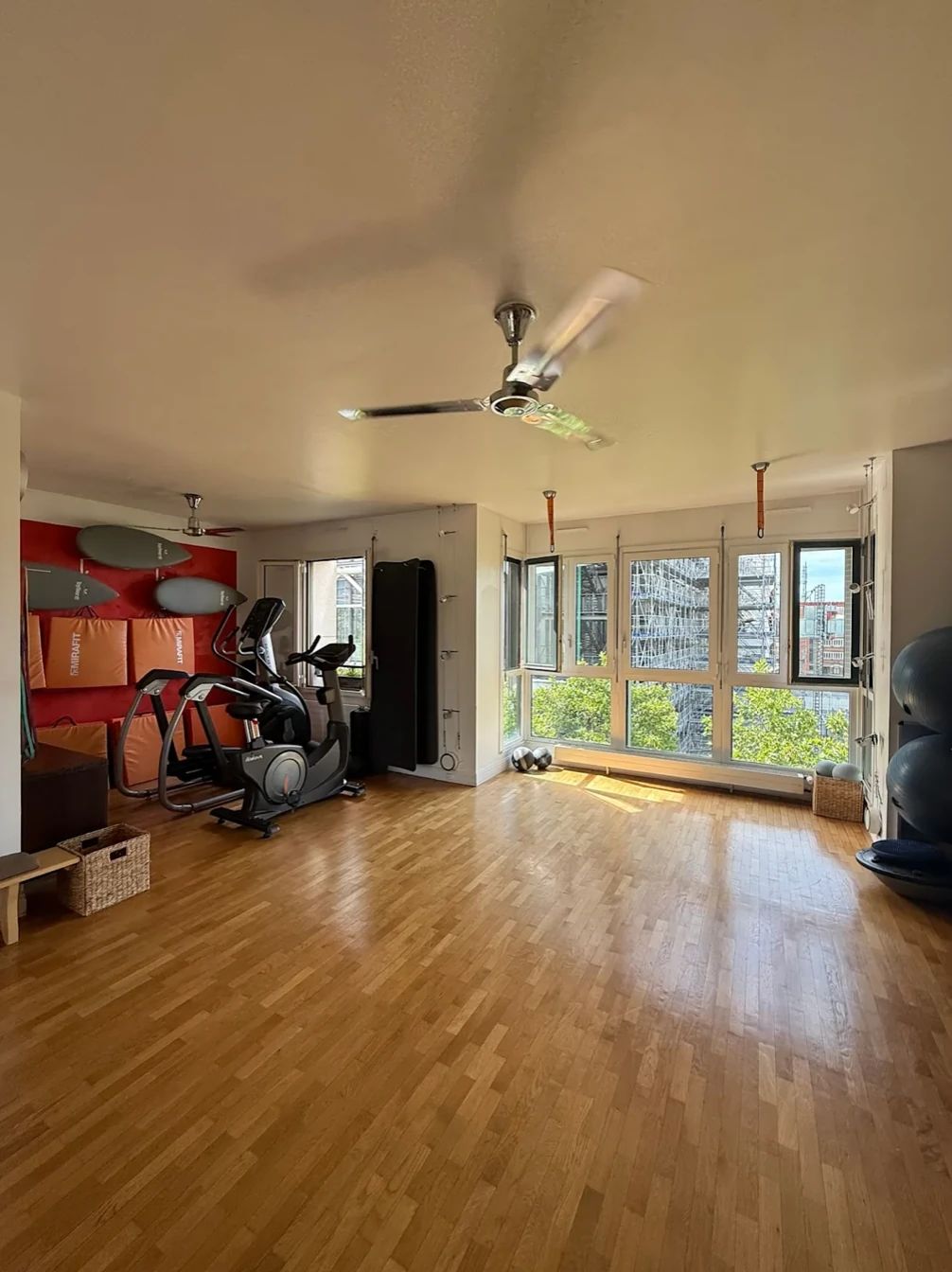
The exercise area
A large area equipped for strength, endurance and joint mobility work.
In the exercise area, among other things
- Wall bars
- Suspension trainer (TRX)
- Dumbbells from 0.5 kg to 20 kg
- Kettlebells
- Resistance bands
- Step and plyo box
- Exercise balls and Swiss ball
- Exercise bike
- Rowing machine
- And plenty more equipment
First appointment
What happens at your first appointment, and what to bring.
-
Talking it through
The health professional asks you a series of questions to understand your pain, its history and your daily life.
-
The examination
A full clinical examination, with various tests, assesses joint mobility, strength and the movements that cause problems.
-
The explanation
When the cause of the pain can be identified, it is explained to you in detail and in plain words, together with the goals of rehabilitation.
-
First exercises
Whenever possible, you are given exercises from the very first session, so you can start your rehabilitation on your own rather than relying only on sessions.
Length of the assessment About 30 minutes on average
What to bring
- Your prescription
- Your Carte Vitale (French health insurance card)
- Recent scans and reports (X-rays, MRI, medical reports)
Training and approach
-
Sessions in French or English
The assessment, explanations and exercises are in French or English, whichever you prefer.
-
An assessment for every course of care
Every course of care starts with an assessment, which sets goals with you and serves as a reference as sessions go on.
-
Exercises to continue at home
Whenever possible, exercises are explained during sessions, so that you can repeat them at home between appointments.
Fees
Fees charged at the practice. With a medical prescription, part of the session is reimbursed by French national health insurance (Assurance Maladie), and your top-up insurance (mutuelle) often covers some or all of the rest, depending on your policy.
- Physiotherapy session
- €38 to €42
- Assessment (added to the first session)
- €20 to €23
Your out-of-pocket cost is therefore usually well below the listed fee. The exact amount depends on your mutuelle policy.
Coverage
- Contracted with French national health insurance
- Direct billing to the Sécurité sociale
- Carte Vitale accepted
Payment methods
- Bank card
- Cash
- Cheque
- Bank transfer
Getting here
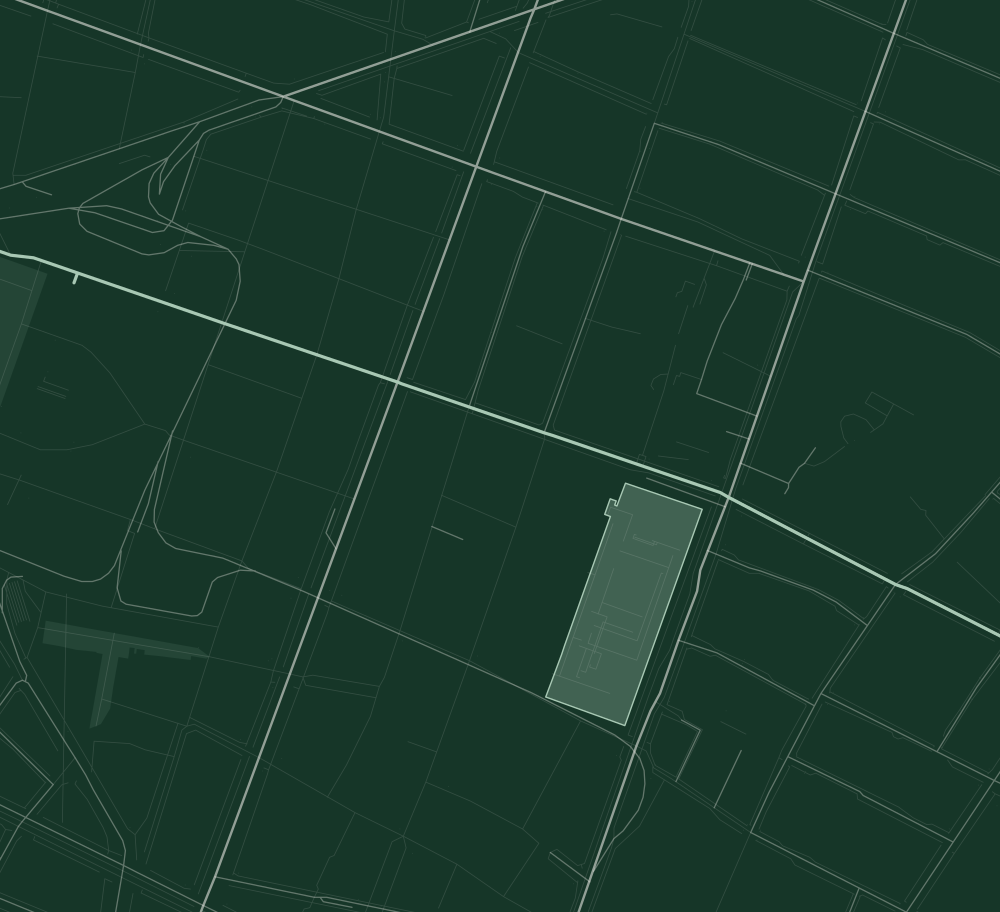
In the 3rd arrondissement, between Beaubourg and Châtelet-Les Halles.
50 rue Rambuteau,
75003 Paris
Cabinet Beaubourg, 5th floor, lift available
Public transport
- Metro 11 Rambuteau
- RER A B D Châtelet-Les Halles
- RER B C Saint-Michel Notre-Dame
- Public car park at 44 rue Rambuteau
Opening hours
| Monday | 9am to 8pm |
|---|---|
| Tuesday | 9am to 8pm |
| Wednesday | 9am to 8pm |
| Thursday | 9am to 8pm |
| Friday | 9am to 5pm |
| Saturday | Mornings, subject to availability (see Doctolib) |
| Sunday | Closed |
Frequently asked questions
How do I book an appointment?
Online on Doctolib, at any time. For any practical question, you can call 06 10 48 45 48.
How much does a session cost?
A session costs €38 to €42. At the first session, the assessment is added, for €20 to €23. With a medical prescription, part of it is reimbursed by French national health insurance, and your mutuelle often covers some or all of the rest depending on your policy.
Are sessions covered by health insurance?
The practice is contracted with French national health insurance and bills the Sécurité sociale directly. The Carte Vitale is accepted.
Which payment methods are accepted?
Bank card, cash, cheque and bank transfer.
What happens at the first session?
It starts with a physiotherapy assessment. The goals of your rehabilitation are then set together with you.
What should I bring?
Your prescription, your Carte Vitale and any recent scans or reports (X-rays, MRI, medical reports).
Is there a lift?
Yes. The practice is on the 5th floor and there is a lift.
Can sessions take place in English?
Yes, consultations take place in French or English.
How do I cancel an appointment?
You can cancel your appointment on Doctolib up to 24 hours before the scheduled time. After that, online cancellation is no longer possible: please call the practice.
Do you offer home visits?
No, sessions take place at the practice only.
How soon can I get an appointment?
Slots are often available within about 24 hours. All availability, including Saturday mornings, is on Doctolib.
How do I get to the practice?
Metro Rambuteau (line 11), RER Châtelet-Les Halles (lines A, B and D) or Saint-Michel Notre-Dame (lines B and C). There is a public car park at 44 rue Rambuteau.